
the collection
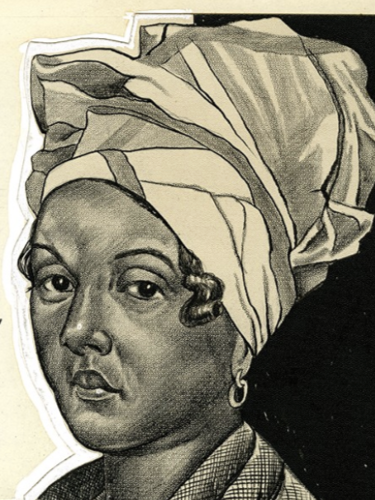
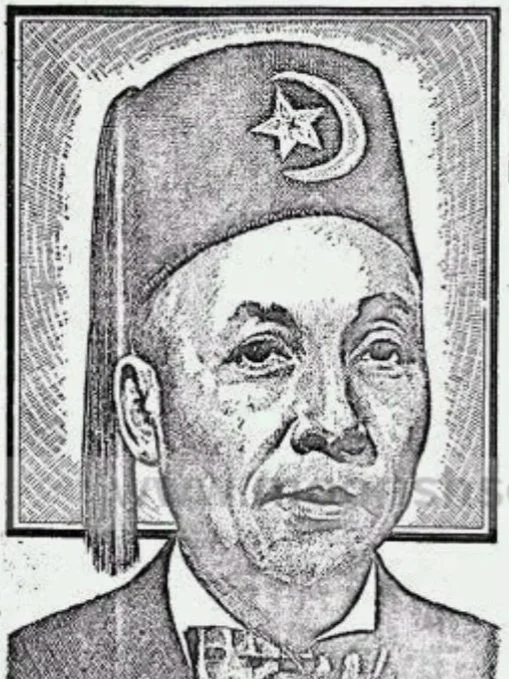
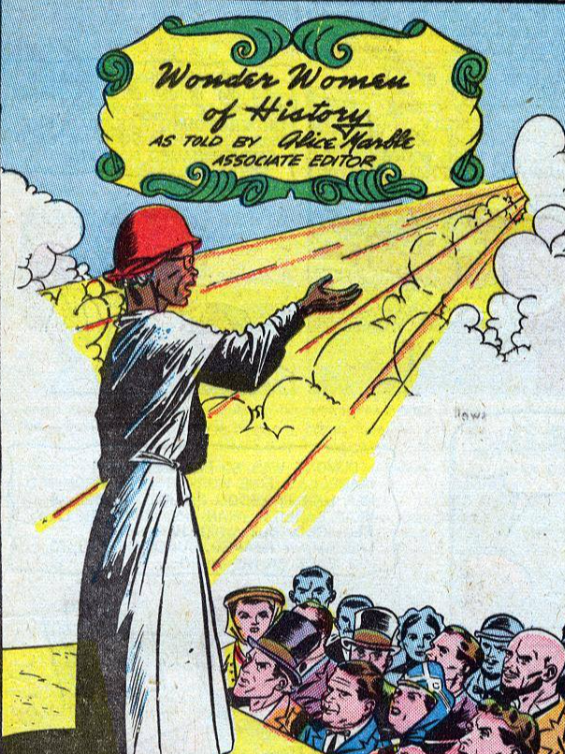
The religious diversity in Black communities connects to the "overlapping zones" framing of the exhibit. There are multiple dynamics of representation at play. The pictures consider default imagery from the outside of religious communities as well as insider views by artists and members of Black religious communities. A white cartoonist depicting a Black preacher; a Black Muslim cartoonist depicting Black Christians; a Catholic comics brand, pushing back against racial stereotypes. Black artists navigating representations of religion faced different pressures than white artists who worked with Christian imagery.
The works gathered here concentrate on the twentieth century, the era when comics came into being as a mass medium, and popular culture was being transformed at a pace never before seen. These were the formative decades of American visual storytelling, before the digital revolution at century's end reshaped how images moved through culture.
The archive shows how the image of the "Holy Hero" was born out of caricatured fantasy and illustrated journalism.
The earliest comics mark the moment when mass media first learned to draw Black religion. At times the images are shown with admiration, sometimes with mockery. They are always grappling with the tensions between religious devotion and display.
Comics and cartoons constitute a significant yet overlooked visual record of how American visual culture has engaged with Black religious identity. The collection displays early caricatures of Christian preachers and cartoons of Muslim prophets. It shows the formation of sacred histories and new mythologies even within the spiteful caricatures that shaped racial representation.
Early 20th century comics mark the moment when mass media first learned to draw Black religion.
The collection displays early caricatures of Christian preachers and Muslim prophets. It shows the formation of sacred histories and new mythologies even within the spiteful caricatures that shaped racial representation. Mid-century works like The Challenger, Wonder Woman no. 13, and Dark Laughter framed the preacher, the evangelist, and the religious leader as public figures. They stand at the intersection of religion, propaganda, and popular art.

What is a religion comic?
Some comics and cartoons were intentionally activist and theologically oriented. The MLK comic was produced by white pacifists for organizing purposes and became an iconic political tool that inspired movements around the world. John Lewis, the Black congressman, was said to have reclaimed the style of this mid 20th century comic book for his graphic novel March. Tom Floyd's Blackman, Spire's Up From Harlem, and Treasure Chest of Fun and Fact draw African American religious conviction into the genres of heroism and faith-based publishing to use the comic for moral instruction. Black evangelical preacher Tom Skinner's conversion testimony appears in Spire Christian Comics, a co-production of the Archie comic book series.. His presentation of Christianity was one of the first to give a national platform to a Black religious voice for white audiences. Fred Carter, a Black artist in the 1970s, created the Christian comic books with an interracial superhero team and painted rare devotional paintings of Black characters, including a Black Jesus. Carter was the unrecognized artist in Jack Chick's fundamentalist publishing empire. By the 1980s, independent creators like Reggie Byers were making Christian children's stories that joined spirituality with popular manga aesthetics. The 1990s expanded the field with Christian comic books like Archangels: The Saga which treated divine power through superhero form, blending scriptural language with speculative vision, and using Black characters as angelic figures. Urban Ministries' Code/Joe and Max and Kingstone Bible Comics—carried the lineage forward through inclusive art and multimedia distribution. In these series the comic book page can be read as a form of devotional text and entertainment.
Together these images form a long visual theology: from the caricatures of African American religious subjects to reimaginings of angels, prophets, and superheroes.

Black representational self-determination
White creators of comics and comics media have consistently turned to Black religious life as subject matter. This fascination ranges across a spectrum: outright mockery in publications like Judge Magazine's "At the Blackville Church" (1904) and Warner Bros.' Clean Pastures (1937); liberal documentation in works like Wonder Woman's celebration of Sojourner Truth (1945); activist mobilization through the Martin Luther King and the Montgomery Story comic book (1957); and white evangelical partnership with Black religiosity in Spire Comics' Up From Harlem (1972).
African American creators have simultaneously built their own visual archive. This was in response to the proliferations of white representations of Blackness and Black religiosity as a parallel infrastructure. Leslie Rogers' satirical Bungleton Green in the Chicago Defender (1928) showed ordinary light-hearted images of the Black preacher, while the activist cartoonist Ollie Harrington's preacher in Dark Laughter (1947) or Tom Floyd's self-published Reverend Prayer superhero in Blackman (1971) created the figure according to the Black image. Urban Ministries' evangelical empire began with Code (2006), and Reggie Byers Kidz of the King brought the pioneering talent of Black artists and publishers who claimed authority over their own theological imagery, using humor, critique, and visual mythmaking. Their work circulated through the Black press, self-publishing ventures, and Black-owned religious publishing houses. These were original territories where Black creators exercised control over how their religious lives and communities were visualized.
these collaborations
Raise questions about whether meaning shifts when work circulates out of its original context.
Where is the line between representation and appropriation? Between collaboration and co-optation?
What happens when Black religious figures appear in white-dominated media?
How does the meaning shift by the use of the comics medium?
How have stereotypical depictions in comics underscored and even justified discrimination, even in religious contexts?
How have Black-produced comics offered counter-narratives that built community political consciousness around the representational image?
What does Black religion look like when drawn—when the sacred is rendered through color, caricature, layout, and sequential pacing?
How do formal choices (exaggeration, satire, compression) determine whether religious authority reads as authority, whether devotion reads as devotion, and whether Black religious identity is framed as irreverent, ridiculous, or marginal?
Who is doing the depicting, for whom, and to what ends—outsider observation, insider authorship, institutional sponsorship, commercial entertainment, evangelism, organizing, memorialization?
How do Christianity and Islam appear together in this visual record, and what does that pluralism change about the standard “Black church” default in Black religious historiography?
How do images function for converting, organizing, theologizing, memorializing, stereotyping, mythologizing—and what does that “cultural work” imply about comics as historical evidence?
Which cases refuse neat moral sorting (neither clearly exploitative nor clearly liberatory), and what do those mixed cases reveal about appropriation, collaboration, and pressure within print economies?
What shifts over time—from caricature to representation, from ridicule to reclamation, from outsider depiction to self-definition—and what persists as an unresolved struggle over public images of Black sacred life?
What is gained—and what is limited—when “a picture is just a picture” sits alongside claims about ideology, persuasion, and sacred narrative?
How have images promoted what they construed as "authentic" Black religiosity for different groups of readers and audiences?
How has commodification of Black religions been negotiated through visual storytelling?
How have different groups conceived of the presentation of African American churches and Muslim organizations; the public presence of preachers/leaders, and imaginary mythic figures?
Taken together, these works form a chronology of representation. They visualize the long negotiation between the sacred and the public image of Black life. They also create a balanced structure for the front page: early press caricature, mid-century reform, late-twentieth-century innovation, and present-day creation. Each selected image marks a point in that history. Those choices matter because together they trace a visual genealogy, a line of continuity showing how Black religious life has been imagined, distorted, and reclaimed in popular print. With these comics and cartoon artifacts we see that religious representation has always been contested by insiders and outsiders. Black religious life is a site of white fascination and appropriation, a space of Black creative self-determination, and a place of ambiguous collaboration where racial and religious meanings remain unresolved.
This digital exhibit invites viewers to consider not only the variety of images of African American religiosity that were created, but who created them, for whom, and what they communicate, recognizing that these questions remain relevant to visual storytelling and the use of comics media for cultural purposes.
This exhibit is organized to display overlapping zones of representation, appropriation, and collaboration. The materials are placed into sections to show how comics media was itself an active site of struggle over how the stories of African American religion and racial identity were told. The exhibit considers Black churches and Islamic organizations. Stories of resistance and liberation and humor. How these traditions were perceived.
Selected images are displayed according to historical context. For more than a hundred years, from the late 1800s to the first two decades of the 21st century, comics and cartoons have served as a medium for displaying a history of African American religious life. The exhibit tracks the genealogy with a chronology. As distinct artifacts that use pictures and text, comics and cartoons encounter religion through different forms and styles.
Some of these are caricatures. Some are sequential art. Some are professionally made. Some are hand-drawn and less skillful. Some of these, with their lack of polish, in their erratic and furtive techniques display a tactile roughness that disrupts our expectations of order and form. They show us that an honest but untidy image can be a visual story in waiting. What makes the variety of these comics particularly interesting to me is their accessibility and ephemerality. These were mass-produced images that shaped how millions of Americans, Black and white, viewed and understood African American religious life. In their panels is shown the violence of stereotyping and the creativity of self representing resistance.
These visual artifacts circulated widely, reached diverse audiences, and performed the work of storytelling through imagery. In these images, form is ideological; in other words, they show how the religion subject, no matter what the tradition of context, whether seen as reverent or ridiculous, authoritative or culturally marginalized, has its own kind of visual presentation and meaning. They show that at times, Black sacred life might be seen as a source of entertainment.
This digital exhibit invites viewers to consider for whom the images were created and to what ends they were used.
The commentary addresses how forms of representation have shaped public perception, political and community identity. I found competing streams of imagery - much of it crudely stereotyped, some of it purely representational, some of it inspirational, some of it ambiguous.